

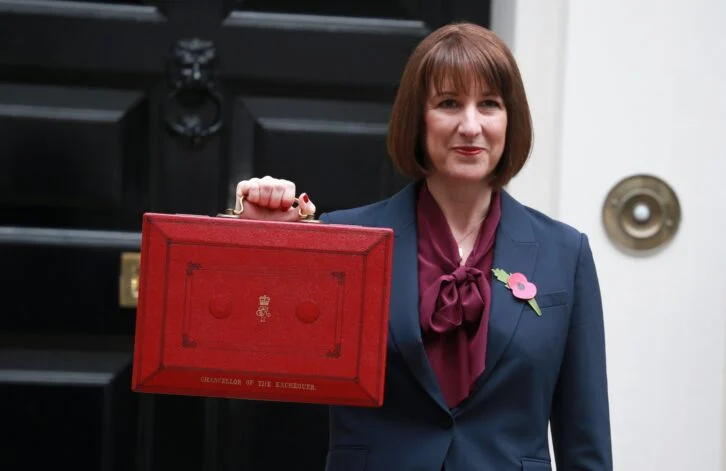
The UK Budget announced on 26 November 2025 marked a turning point for the property sector, with the government making it clear that housing wealth and rental income will play a larger role in funding public services in the years ahead.
Delivered by Chancellor Rachel Reeves, the Budget focused heavily on fairness in the tax system — with property singled out as one of the key areas where change was needed. While the measures stop short of a full-scale overhaul, they nonetheless carry significant implications for homeowners, landlords, buyers, and renters alike.
Here’s what was announced — and what it means for the housing market.
The Key Announcements Affecting Property
A New High-Value Property Surcharge
The most eye-catching reform is the introduction of a new annual surcharge for residential properties valued above £2 million, beginning in April 2028.
Often referred to as a “mansion tax,” this will sit on top of existing council tax rules and is designed to ensure that owners of the most expensive homes contribute more each year, rather than only when buying or selling.
Although it affects only a small percentage of homes nationwide, those properties are heavily concentrated in London and the South East, meaning the regional impact will be uneven.
Higher Tax on Rental Income
From April 2027, landlords will see a 2% increase in income tax on rental earnings.
This adds to a long list of earlier changes that have already squeezed buy-to-let investors, including restrictions on mortgage interest relief and higher stamp duty for additional properties. For many landlords, profits will tighten further — raising serious questions about long-term viability for smaller investors.
No Change to Stamp Duty
Despite widespread speculation, stamp duty remains unchanged.
This has come as a relief to buyers. A rise in transaction taxes would almost certainly have slowed the market further, particularly among first-time buyers and home movers already grappling with high mortgage rates.
No Broad Annual Property Tax
There was also no move to introduce an annual tax on all homes above £500,000 — something widely feared ahead of the Budget.
This has helped stabilise confidence for middle-income homeowners who were concerned about ongoing additional property charges.
What This Means for Different Groups
Owners of High-Value Homes
If you own property above £2 million, this Budget represents a clear financial shift.
There is now a long-term cost to holding high-value residential assets — not just when you sell, but simply by owning. In response, some owners may:
-
Reconsider keeping larger or multiple properties
-
Look at downsizing
-
Delay or cancel purchases
-
Price strategically below the £2m threshold
Over time, the top end of the market may soften as demand weakens.
Landlords
Landlords face the harshest impact overall.
With rising taxes and costs, many may attempt to pass increased expenses on to tenants through higher rents. Others — particularly small, independent landlords — may decide to exit the market altogether.
Fewer rental properties could mean:
-
Higher rents
-
Less choice for tenants
-
Increased competition for remaining homes
In the long run, this risks deepening the UK’s already severe rental crisis.
Home Buyers
For buyers, the outcome is more reassuring than expected.
The lack of stamp duty increases and absence of a broad property tax gives the market breathing room. Buyers now have greater certainty when budgeting for purchases, and confidence may gradually improve — especially if interest rates fall.
However, any increase in renter demand caused by landlords selling up may also place further pressure on housing supply.
Renters
Renters are not directly taxed — but they are likely to feel the impact indirectly.
As landlords face higher costs, tenants could see:
-
Rent increases
-
Reduced maintenance standards
-
Fewer homes available
For renters, affordability remains a growing concern — and one that may worsen if investor confidence continues to erode.
The Bigger Direction of Travel
This Budget signals a fundamental shift in housing policy.
Property is no longer treated solely as an asset — it is increasingly viewed as a source of ongoing taxable wealth. The government’s message is clear: income from assets should be taxed more similarly to income from work.
The approach is strategic:
-
Target wealth at the top
-
Avoid destabilising the whole market
-
Preserve household confidence
-
Protect transaction activity
It is not a revolution — but it is a realignment.
Risks Ahead
While politically cautious, the changes carry risk:
-
Rent inflation could become entrenched
-
Investor withdrawal may reduce supply
-
Regional imbalances may deepen
-
Market uncertainty could return if more taxes follow in future budgets
Much will depend on whether housing stock increases fast enough to offset falling landlord participation.
Final Thoughts
The November 2025 Budget does not upend the property market — but it reshapes it.
High-value homeowners and landlords bear the greatest burden, while ordinary buyers have — for now — avoided major shocks. Renters, although not taxed directly, remain vulnerable to knock-on effects.
Ultimately, this Budget positions property not just as a place to live — but as a key pillar of national taxation.
And that change is unlikely to be reversed.
Get help: Speak to a UK mortgage broker